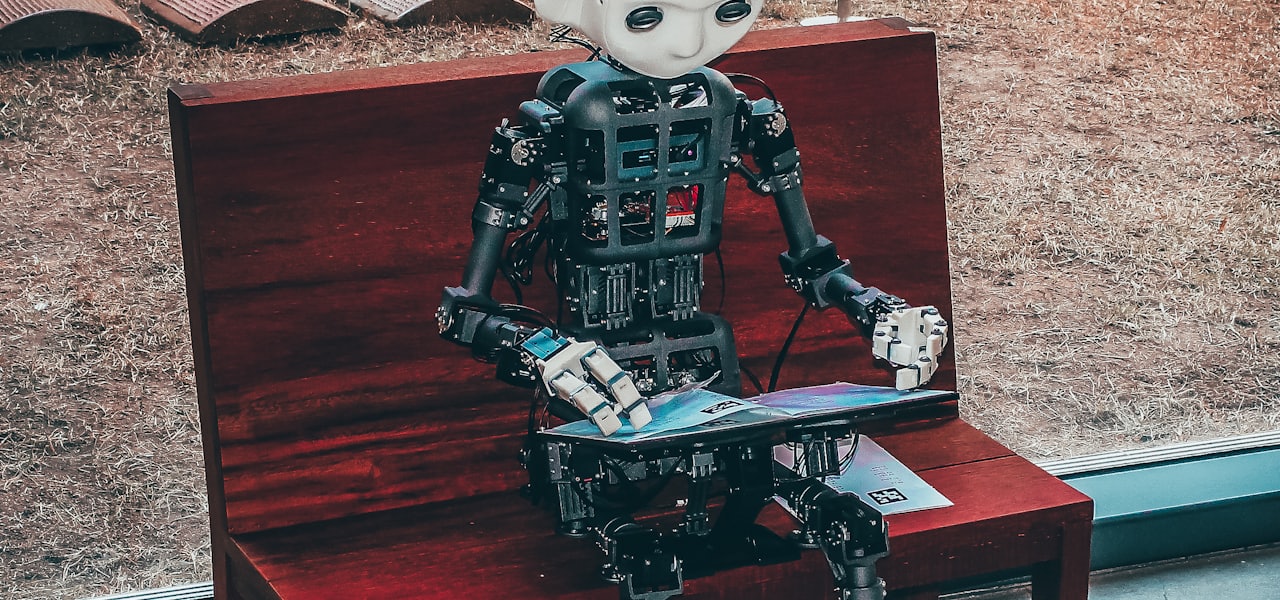
Shopping for the best AI photo editor? An AI photo editor is software that uses machine learning to help you get more done — it keeps getting smarter as the underlying models improve. Pricing, accuracy, and the size of the model behind the tool are the three factors that most affect daily usefulness. Whether you are a beginner or a pro, the right AI photo editor slots into your workflow and pays for itself fast. Below we compare features, pricing, and real output so you can choose with confidence.
Geometric hashing
In computer science, geometric hashing is a method for efficiently finding two-dimensional objects represented by discrete points that have undergone an affine transformation, though extensions exist to other object representations and transformations. In an off-line step, the objects are encoded by treating each pair of points as a geometric basis. The remaining points can be represented in an invariant fashion with respect to this basis using two parameters. For each point, its quantized transformed coordinates are stored in the hash table as a key, and indices of the basis points as a value. Then a new pair of basis points is selected, and the process is repeated. In the on-line (recognition) step, randomly selected pairs of data points are considered as candidate bases. For each candidate basis, the remaining data points are encoded according to the basis and possible correspondences from the object are found in the previously constructed table. The candidate basis is accepted if a sufficiently large number of the data points index a consistent object basis. Geometric hashing was originally suggested in computer vision for object recognition in 2D and 3D, but later was applied to different problems such as structural alignment of proteins. == Geometric hashing in computer vision == Geometric hashing is a method used for object recognition. Let’s say that we want to check if a model image can be seen in an input image. This can be accomplished with geometric hashing. The method could be used to recognize one of the multiple objects in a base, in this case the hash table should store not only the pose information but also the index of object model in the base. === Example === For simplicity, this example will not use too many point features and assume that their descriptors are given by their coordinates only (in practice local descriptors such as SIFT could be used for indexing). ==== Training Phase ==== Find the model's feature points. Assume that 5 feature points are found in the model image with the coordinates ( 12 , 17 ) ; {\displaystyle (12,17);} ( 45 , 13 ) ; {\displaystyle (45,13);} ( 40 , 46 ) ; {\displaystyle (40,46);} ( 20 , 35 ) ; {\displaystyle (20,35);} ( 35 , 25 ) {\displaystyle (35,25)} , see the picture. Introduce a basis to describe the locations of the feature points. For 2D space and similarity transformation the basis is defined by a pair of points. The point of origin is placed in the middle of the segment connecting the two points (P2, P4 in our example), the x ′ {\displaystyle x'} axis is directed towards one of them, the y ′ {\displaystyle y'} is orthogonal and goes through the origin. The scale is selected such that absolute value of x ′ {\displaystyle x'} for both basis points is 1. Describe feature locations with respect to that basis, i.e. compute the projections to the new coordinate axes. The coordinates should be discretised to make recognition robust to noise, we take the bin size 0.25. We thus get the coordinates ( − 0.75 , − 1.25 ) ; {\displaystyle (-0.75,-1.25);} ( 1.00 , 0.00 ) ; {\displaystyle (1.00,0.00);} ( − 0.50 , 1.25 ) ; {\displaystyle (-0.50,1.25);} ( − 1.00 , 0.00 ) ; {\displaystyle (-1.00,0.00);} ( 0.00 , 0.25 ) {\displaystyle (0.00,0.25)} Store the basis in a hash table indexed by the features (only transformed coordinates in this case). If there were more objects to match with, we should also store the object number along with the basis pair. Repeat the process for a different basis pair (Step 2). It is needed to handle occlusions. Ideally, all the non-colinear pairs should be enumerated. We provide the hash table after two iterations, the pair (P1, P3) is selected for the second one. Hash Table: Most hash tables cannot have identical keys mapped to different values. So in real life one won’t encode basis keys (1.0, 0.0) and (-1.0, 0.0) in a hash table. ==== Recognition Phase ==== Find interesting feature points in the input image. Choose an arbitrary basis. If there isn't a suitable arbitrary basis, then it is likely that the input image does not contain the target object. Describe coordinates of the feature points in the new basis. Quantize obtained coordinates as it was done before. Compare all the transformed point features in the input image with the hash table. If the point features are identical or similar, then increase the count for the corresponding basis (and the type of object, if any). For each basis such that the count exceeds a certain threshold, verify the hypothesis that it corresponds to an image basis chosen in Step 2. Transfer the image coordinate system to the model one (for the supposed object) and try to match them. If successful, the object is found. Otherwise, go back to Step 2. === Finding mirrored pattern === It seems that this method is only capable of handling scaling, translation, and rotation. However, the input image may contain the object in mirror transform. Therefore, geometric hashing should be able to find the object, too. There are two ways to detect mirrored objects. For the vector graph, make the left side positive, and the right side negative. Multiplying the x position by -1 will give the same result. Use 3 points for the basis. This allows detecting mirror images (or objects). Actually, using 3 points for the basis is another approach for geometric hashing. === Geometric hashing in higher-dimensions === Similar to the example above, hashing applies to higher-dimensional data. For three-dimensional data points, three points are also needed for the basis. The first two points define the x-axis, and the third point defines the y-axis (with the first point). The z-axis is perpendicular to the created axis using the right-hand rule. Notice that the order of the points affects the resulting basis
ISSCO Graphics
Integrated Software Systems Corporation (ISSCO), doing business as ISSCO Graphics, was an American software developer and publisher based in San Diego, California, and active from 1970 to 1986. They were best known for their enterprise graphics software packages, including Tellagraf, CueChart and Disspla. == History == ISSCO Graphics had considered acquiring Breakthrough Software, whose software focus involved PC DOS, as a means of getting into the PC arena, but backed off when Computer Associates made an offer to acquire ISSCO. By early 1987 it was reported that "Issco users breathe sigh of relief" that all was well. The ISSCO User's Group was founded in 1976. ISSCO, which was founded in 1970 by Peter Preuss, was acquired by Computer Associates in 1986. == Notable products == === Tellagraf === ISSCO's Tellagraf is an early software package designed to allow end-users to "turn out full color, professional quality charts" with initial results displayed on a screen, modified as needed, and then "a final 'hard-copy' can be made .. or made into 35mm color transparencies for projection onto a screen." Users of Tellagraf often had access to CueChart and Disspla software. Often computer sites having one had all three. Terminals with varying degrees of graphics, such as the DEC's VT100 and Tektronix's Tektronix 4xxx family of text and graphics terminals. were supported, and the software ran on popular computing platforms. Four years are important to Tellagraf's early history: 1978: ease of use 1980: graphic-artist quality 1982: introduction of CueChart, and recognition by IEEE. 1983: "quality graphics enters the mainstream of data processing with ..." Tellegraf was eventually acquired by Computer Associates and renamed CA-Tellegraf. SAS users found it helpful. Universities, research institutes and financial services firms were among early users. === Disspla === Disspla is a package of data plotting subroutines that can be used from high level languages. It was also acquired by Computer Associates. === Tellaplan === In 1983 ISSCO introduced Tellaplan, "a project planning, report and schedule charting system for Tell-A- Graf users in IBM MVS or CMS or Digital Equipment Corp. VAX computers" atop which they built "two visual project management software packages" three years later.
CodeCheck
CodeCheck is a mobile app that provides consumers with information about the ingredients in cosmetic products, as well as the ingredients and nutritional values of food. Users can access this information by scanning the product’s barcode with a smartphone or by using a text-based search. The app is available for iOS and Android devices in Germany, Austria, Switzerland, the United Kingdom, the United States, and the Netherlands. == History == CodeCheck was founded in 2010 as an association, online database, and app by Roman Bleichenbacher, who was then a student in Zurich. A website of the same name had already been launched in 2002, where users could enter information about ingredients, nutritional values, and manufacturers of products. The first round of financing took place in July 2014 and raised over 1.1 million Swiss francs, which coincided with the founding of CodeCheck AG. Investors included Doodle founders Myke Näf and Paul E. Sevinç. The company subsequently expanded to Austria and Germany. In the same year, Boris Manhart became CEO. CodeCheck GmbH was established in Berlin in 2016. The app became available in the United States in 2017 and in the United Kingdom in November 2019. In 2020, it was also launched in the Netherlands. Following insolvency proceedings, the app has been owned by Producto Check GmbH since 2022. == Functions == The app can be used to scan the barcode of food and cosmetic products. It then displays information about ingredients, nutritional values, manufacturers and certification labels. For many years, users were able to enter and edit product information themselves and indicate advantages and disadvantages of individual products. Since 2020, the app has placed greater emphasis on machine text recognition. The collected data is combined with substance ratings using an algorithm. These ratings are based on scientific studies and expert assessments, including those from the Consumer Advice Centre in Hamburg, Greenpeace, the WWF and the German Association for the Environment and Nature Conservation (BUND e. V.), and cannot be modified by users or manufacturers. The app also provides information on the sugar and fat content of food products. In addition, it indicates whether a product contains hormone-active substances, microplastics, palm oil, animal-derived ingredients, lactose or gluten. Since 2020, the app has displayed a climate score for food products in cooperation with the Eaternity Institute. == Financing == CodeCheck is primarily financed through native advertising and banner ads. Since 2018, the company has also offered analysis services and survey tools directly to fast-moving consumer goods (FMCG) manufacturers. In addition, access to the API is available, enabling other companies to use the product database. With the introduction of a subscription model in 2019, the CodeCheck app can be used ad-free and in offline mode. Since 2021, CodeCheck has also offered its own “Green Label” certification for manufacturers. Products are certified if at least 90 percent of their ingredients are classified as harmless. == Awards == In May 2015, the app topped the download charts for the first time, reaching 2.3 million installations. By September 2019, the app had once again reached the top of the German app charts, surpassing five million downloads.
Spherical basis
In pure and applied mathematics, particularly quantum mechanics and computer graphics and their applications, a spherical basis is the basis used to express spherical tensors. The spherical basis closely relates to the description of angular momentum in quantum mechanics and spherical harmonic functions. While spherical polar coordinates are one orthogonal coordinate system for expressing vectors and tensors using polar and azimuthal angles and radial distance, the spherical basis are constructed from the standard basis and use complex numbers. == In three dimensions == A vector A in 3D Euclidean space R3 can be expressed in the familiar Cartesian coordinate system in the standard basis ex, ey, ez, and coordinates Ax, Ay, Az: or any other coordinate system with associated basis set of vectors. From this extend the scalars to allow multiplication by complex numbers, so that we are now working in C 3 {\displaystyle \mathbb {C} ^{3}} rather than R 3 {\displaystyle \mathbb {R} ^{3}} . === Basis definition === In the spherical bases denoted e+, e−, e0, and associated coordinates with respect to this basis, denoted A+, A−, A0, the vector A is: where the spherical basis vectors can be defined in terms of the Cartesian basis using complex-valued coefficients in the xy plane: in which i {\displaystyle i} denotes the imaginary unit, and one normal to the plane in the z direction: e 0 = e z {\displaystyle \mathbf {e} _{0}=\mathbf {e} _{z}} The inverse relations are: === Commutator definition === While giving a basis in a 3-dimensional space is a valid definition for a spherical tensor, it only covers the case for when the rank k {\displaystyle k} is 1. For higher ranks, one may use either the commutator, or rotation definition of a spherical tensor. The commutator definition is given below, any operator T q ( k ) {\displaystyle T_{q}^{(k)}} that satisfies the following relations is a spherical tensor: [ J ± , T q ( k ) ] = ℏ ( k ∓ q ) ( k ± q + 1 ) T q ± 1 ( k ) {\displaystyle [J_{\pm },T_{q}^{(k)}]=\hbar {\sqrt {(k\mp q)(k\pm q+1)}}T_{q\pm 1}^{(k)}} [ J z , T q ( k ) ] = ℏ q T q ( k ) {\displaystyle [J_{z},T_{q}^{(k)}]=\hbar qT_{q}^{(k)}} === Rotation definition === Analogously to how the spherical harmonics transform under a rotation, a general spherical tensor transforms as follows, when the states transform under the unitary Wigner D-matrix D ( R ) {\displaystyle {\mathcal {D}}(R)} , where R is a (3×3 rotation) group element in SO(3). That is, these matrices represent the rotation group elements. With the help of its Lie algebra, one can show these two definitions are equivalent. D ( R ) T q ( k ) D † ( R ) = ∑ q ′ = − k k T q ′ ( k ) D q ′ q ( k ) {\displaystyle {\mathcal {D}}(R)T_{q}^{(k)}{\mathcal {D}}^{\dagger }(R)=\sum _{q'=-k}^{k}T_{q'}^{(k)}{\mathcal {D}}_{q'q}^{(k)}} === Coordinate vectors === For the spherical basis, the coordinates are complex-valued numbers A+, A0, A−, and can be found by substitution of (3B) into (1), or directly calculated from the inner product ⟨, ⟩ (5): A 0 = ⟨ e 0 , A ⟩ = ⟨ e z , A ⟩ = A z {\displaystyle A_{0}=\left\langle \mathbf {e} _{0},\mathbf {A} \right\rangle =\left\langle \mathbf {e} _{z},\mathbf {A} \right\rangle =A_{z}} with inverse relations: In general, for two vectors with complex coefficients in the same real-valued orthonormal basis ei, with the property ei·ej = δij, the inner product is: where · is the usual dot product and the complex conjugate must be used to keep the magnitude (or "norm") of the vector positive definite. == Properties (three dimensions) == === Orthonormality === The spherical basis is an orthonormal basis, since the inner product ⟨, ⟩ (5) of every pair vanishes meaning the basis vectors are all mutually orthogonal: ⟨ e + , e − ⟩ = ⟨ e − , e 0 ⟩ = ⟨ e 0 , e + ⟩ = 0 {\displaystyle \left\langle \mathbf {e} _{+},\mathbf {e} _{-}\right\rangle =\left\langle \mathbf {e} _{-},\mathbf {e} _{0}\right\rangle =\left\langle \mathbf {e} _{0},\mathbf {e} _{+}\right\rangle =0} and each basis vector is a unit vector: ⟨ e + , e + ⟩ = ⟨ e − , e − ⟩ = ⟨ e 0 , e 0 ⟩ = 1 {\displaystyle \left\langle \mathbf {e} _{+},\mathbf {e} _{+}\right\rangle =\left\langle \mathbf {e} _{-},\mathbf {e} _{-}\right\rangle =\left\langle \mathbf {e} _{0},\mathbf {e} _{0}\right\rangle =1} hence the need for the normalizing factors of 1 / 2 {\displaystyle 1/\!{\sqrt {2}}} . === Change of basis matrix === The defining relations (3A) can be summarized by a transformation matrix U: ( e + e − e 0 ) = U ( e x e y e z ) , U = ( − 1 2 − i 2 0 + 1 2 − i 2 0 0 0 1 ) , {\displaystyle {\begin{pmatrix}\mathbf {e} _{+}\\\mathbf {e} _{-}\\\mathbf {e} _{0}\end{pmatrix}}=\mathbf {U} {\begin{pmatrix}\mathbf {e} _{x}\\\mathbf {e} _{y}\\\mathbf {e} _{z}\end{pmatrix}}\,,\quad \mathbf {U} ={\begin{pmatrix}-{\frac {1}{\sqrt {2}}}&-{\frac {i}{\sqrt {2}}}&0\\+{\frac {1}{\sqrt {2}}}&-{\frac {i}{\sqrt {2}}}&0\\0&0&1\end{pmatrix}}\,,} with inverse: ( e x e y e z ) = U − 1 ( e + e − e 0 ) , U − 1 = ( − 1 2 + 1 2 0 + i 2 + i 2 0 0 0 1 ) . {\displaystyle {\begin{pmatrix}\mathbf {e} _{x}\\\mathbf {e} _{y}\\\mathbf {e} _{z}\end{pmatrix}}=\mathbf {U} ^{-1}{\begin{pmatrix}\mathbf {e} _{+}\\\mathbf {e} _{-}\\\mathbf {e} _{0}\end{pmatrix}}\,,\quad \mathbf {U} ^{-1}={\begin{pmatrix}-{\frac {1}{\sqrt {2}}}&+{\frac {1}{\sqrt {2}}}&0\\+{\frac {i}{\sqrt {2}}}&+{\frac {i}{\sqrt {2}}}&0\\0&0&1\end{pmatrix}}\,.} It can be seen that U is a unitary matrix, in other words its Hermitian conjugate U† (complex conjugate and matrix transpose) is also the inverse matrix U−1. For the coordinates: ( A + A − A 0 ) = U ∗ ( A x A y A z ) , U ∗ = ( − 1 2 + i 2 0 + 1 2 + i 2 0 0 0 1 ) , {\displaystyle {\begin{pmatrix}A_{+}\\A_{-}\\A_{0}\end{pmatrix}}=\mathbf {U} ^{\mathrm {} }{\begin{pmatrix}A_{x}\\A_{y}\\A_{z}\end{pmatrix}}\,,\quad \mathbf {U} ^{\mathrm {} }={\begin{pmatrix}-{\frac {1}{\sqrt {2}}}&+{\frac {i}{\sqrt {2}}}&0\\+{\frac {1}{\sqrt {2}}}&+{\frac {i}{\sqrt {2}}}&0\\0&0&1\end{pmatrix}}\,,} and inverse: ( A x A y A z ) = ( U ∗ ) − 1 ( A + A − A 0 ) , ( U ∗ ) − 1 = ( − 1 2 + 1 2 0 − i 2 − i 2 0 0 0 1 ) . {\displaystyle {\begin{pmatrix}A_{x}\\A_{y}\\A_{z}\end{pmatrix}}=(\mathbf {U} ^{\mathrm {} })^{-1}{\begin{pmatrix}A_{+}\\A_{-}\\A_{0}\end{pmatrix}}\,,\quad (\mathbf {U} ^{\mathrm {} })^{-1}={\begin{pmatrix}-{\frac {1}{\sqrt {2}}}&+{\frac {1}{\sqrt {2}}}&0\\-{\frac {i}{\sqrt {2}}}&-{\frac {i}{\sqrt {2}}}&0\\0&0&1\end{pmatrix}}\,.} === Cross products === Taking cross products of the spherical basis vectors, we find an obvious relation: e q × e q = 0 {\displaystyle \mathbf {e} _{q}\times \mathbf {e} _{q}={\boldsymbol {0}}} where q is a placeholder for +, −, 0, and two less obvious relations: e ± × e ∓ = ± i e 0 {\displaystyle \mathbf {e} _{\pm }\times \mathbf {e} _{\mp }=\pm i\mathbf {e} _{0}} e ± × e 0 = ± i e ± {\displaystyle \mathbf {e} _{\pm }\times \mathbf {e} _{0}=\pm i\mathbf {e} _{\pm }} === Inner product in the spherical basis === The inner product between two vectors A and B in the spherical basis follows from the above definition of the inner product: ⟨ A , B ⟩ = A + B + ⋆ + A − B − ⋆ + A 0 B 0 ⋆ {\displaystyle \left\langle \mathbf {A} ,\mathbf {B} \right\rangle =A_{+}B_{+}^{\star }+A_{-}B_{-}^{\star }+A_{0}B_{0}^{\star }}
Valantic
Valantic GmbH (stylised as valantic) is an IT service and consulting company headquartered in Munich, Germany. == History == Valantic GmbH was founded in 2012 under the name Dabero Service Group. Until it was renamed Valantic GmbH in 2017, the company merged with IT service providers and consulting firms. These included, among others, Realtime AG, a company for SAP systems. The companies involved in these mergers were also renamed in 2017 and have since used the Valantic brand name. Realtime AG, for example, became Valantic ERP Services AG. During the COVID-19 pandemic and the resulting economic pressures, demand increased for IT service providers, particularly those offering customised software, IT consulting, SAP services, customer experience, cybersecurity, IoT, and digital work environments. In the following years, Valantic expanded by integrating additional companies. In 2021, Valantic expanded into other European countries through the integration of the Dutch company ISM eCompany and the Portuguese consulting firm Abaco. In 2022, the consulting firm C-Clear/Atom Ideas from Belgium joined Valantic. In February 2019, DPE Deutsche Private Equity Management III GmbH (DPE) took over the majority shareholding in Valantic. The founder, Holger von Daniels, and the further management retained a 25% stake. By 2025, DPE had invested €500 million in Valantic. In the following years, Valantic expanded its international locations. In 2023, Valantic incorporated the Danish company Inspari into the group, thereby entering the Scandinavian market. Inspari is a company for Microsoft technologies such as Azure and Power Platform. In the same year, Valantic joined forces with the Aiopsgroup, an international provider of online shopping applications for private and business customers of large companies. The company is based in Bulgaria with additional locations across Eastern Europe and other places. Additionally, the SAP applications division was expanded through the merger with the Spanish company Saptools. As a result, the companies became one of the largest European end-to-end consulting and implementation house for SAP services. By the end of 2023, Valantic had locations in 18 countries. In November 2024, Valantic announced its merger with the Danish digital consultancy Venzo. Through the integration of the company, founded in 2007 and oriented towards Microsoft technologies and digital transformation projects in the areas of automation, artificial intelligence, security, infrastructure and change management, Valantic further expanded its presence in Denmark and the Nordic countries. In July 2025, Valantic announced its merger with Utiligence GmbH, a Mannheim-based consulting firm for SAP technologies. Utiligence works primarily for the energy industry and supports companies in the integration of SAP S/4HANA and the digitalisation of business processes. == Company structure == Valantic is a partnership-based organisation, with partners acting as decision-makers in matters relating to corporate strategy, employee development and acquisitions. Valantic pursues a holacratic approach, promoting an open and self-organised way of working instead of hierarchical structures. By merging with other companies, Valantic is expanding its range of services and tapping into international markets and market shares. The new companies use Valantic's core systems and support processes, but usually retain their original structure. In the 2024 financial year, the company generated revenue of €544 million and employed 3,874 on average. Valantic has over 40 locations internationally. == Services == Valantic GmbH is a consulting firm, software provider and implementation partner. The company offers services in the areas of digital strategy and analytics (business intelligence and data science), customer experience management, SAP services, smart industries (Industry 4.0, supply chain management, and production planning and control processes), and financial services automation. The automation of financial services is aimed at financial service providers and banks. Valantic has been offering services in the field of generative artificial intelligence (GenAI) since 2023. Part of these services involves enabling companies to use GenAI securely and in compliance with regulations in order to make internal work processes more efficient. Its customers include large corporations, several medium-sized companies and DAX-listed companies. == Research == Since 2018, Valantic has published an annual study on the development of the SAP landscape in German-speaking countries. The study examines topics such as the migration to SAP S/4HANA, cloud strategies, technological trends and the use of artificial intelligence in business processes. The 2025 survey of 201 SAP professionals from the DACH region showed, for example, an increase in ongoing and completed S/4HANA migration projects, as well as a further shift towards private-cloud systems. The use of artificial intelligence continued to grow, as did the use of the SAP Business Technology Platform and the Business Data Cloud. In 2025, Valantic, together with the Handelsblatt Research Institute, published the trend study Digital 2030 – The Rise of Applied AI. The study was based on a survey of around 700 executives from companies in Germany, Austria, and Switzerland on the economic effects of current digitalisation trends. According to the study, most respondents consider artificial intelligence, cybersecurity, and cloud computing to hold the greatest strategic importance for business success by 2030. Around 70% of the participating companies stated that they are already achieving measurable business benefits through the use of AI applications, for example in quality control, document management, logistics, or customer service.
Shape analysis (digital geometry)
This article describes shape analysis to analyze and process geometric shapes. == Description == Shape analysis is the (mostly) automatic analysis of geometric shapes, for example using a computer to detect similarly shaped objects in a database or parts that fit together. For a computer to automatically analyze and process geometric shapes, the objects have to be represented in a digital form. Most commonly a boundary representation is used to describe the object with its boundary (usually the outer shell, see also 3D model). However, other volume based representations (e.g. constructive solid geometry) or point based representations (point clouds) can be used to represent shape. Once the objects are given, either by modeling (computer-aided design), by scanning (3D scanner) or by extracting shape from 2D or 3D images, they have to be simplified before a comparison can be achieved. The simplified representation is often called a shape descriptor (or fingerprint, signature). These simplified representations try to carry most of the important information, while being easier to handle, to store and to compare than the shapes directly. A complete shape descriptor is a representation that can be used to completely reconstruct the original object (for example the medial axis transform). == Application fields == Shape analysis is used in many application fields: archeology for example, to find similar objects or missing parts architecture for example, to identify objects that spatially fit into a specific space medical imaging to understand shape changes related to illness or aid surgical planning virtual environments or on the 3D model market to identify objects for copyright purposes security applications such as face recognition entertainment industry (movies, games) to construct and process geometric models or animations computer-aided design and computer-aided manufacturing to process and to compare designs of mechanical parts or design objects. == Shape descriptors == Shape descriptors can be classified by their invariance with respect to the transformations allowed in the associated shape definition. Many descriptors are invariant with respect to congruency, meaning that congruent shapes (shapes that could be translated, rotated and mirrored) will have the same descriptor (for example moment or spherical harmonic based descriptors or Procrustes analysis operating on point clouds). Another class of shape descriptors (called intrinsic shape descriptors) is invariant with respect to isometry. These descriptors do not change with different isometric embeddings of the shape. Their advantage is that they can be applied nicely to deformable objects (e.g. a person in different body postures) as these deformations do not involve much stretching but are in fact near-isometric. Such descriptors are commonly based on geodesic distances measures along the surface of an object or on other isometry invariant characteristics such as the Laplace–Beltrami spectrum (see also spectral shape analysis). There are other shape descriptors, such as graph-based descriptors like the medial axis or the Reeb graph that capture geometric and/or topological information and simplify the shape representation but can not be as easily compared as descriptors that represent shape as a vector of numbers. From this discussion it becomes clear, that different shape descriptors target different aspects of shape and can be used for a specific application. Therefore, depending on the application, it is necessary to analyze how well a descriptor captures the features of interest.